Archives of Depression and Anxiety
Music Intervention Can Improve Emotion in Cancer Patients during Disease Progression
1School of Chinese Medicine, University of Hong Kong, 10 Sassoon Road, Hong Kong
2Centre on Behavioral Health within the Faculty of Social Sciences, University of Hong Kong, 5 Sassoon Road, Hong Kong
3Guangzhou University of traditional Chinese Medicine, China
4Chengdu University of traditional Chinese Medicine, China
Author and article information
Cite this as
Jia L, Chen J, Th Ho R, Yu J, Guo L (2016) Music Intervention Can Improve Emotion in Cancer Patients during Disease Progression. Arch Depress Anxiety. 2016; 2(1): 7-9. Available from: 10.17352/2455-5460.000007
Copyright License
© 2016 Jia L, et al. This is an open-access article distributed under the terms of the Creative Commons Attribution License, which permits unrestricted use, distribution, and reproduction in any medium, provided the original author and source are credited.Music has long been regarded to aid health and loss-adaptation, but effect of music intervention on cancer patients is not well-understood. The aims of this study are to summarize and describe the role of music before and after diagnosis. This review examines music intervention studies with randomized designs for patients with cancer published between 1991 and 2015 from three English- language databases and Chinese-language databases. Ten studies that met specific inclusion criteria were reviewed. Our review indicates that music intervention may have beneficial effects on emotion (anxiety/depression) in patients with cancer. More research is needed to ascertain the most optimal intervention methodology on which cancer populations or which treatment modalities are appropriate for such an intervention.
Emotional distress in cancer patients happens during their acute treatment and after treatment ends [1,2]. Some cancer patients were reported to have positive results after treatment. However, many patients suffered severe traumatic stress and showed regressive, withdrawn and angry behaviors [3-6]. Non-pharmaceutical interventions play an important role in alleviating these symptoms, including pain, depression, anxiety, and poor quality of life during the treatment of cancer [7-9]. Among these complimentary interventions, music intervention attracted a lot of attention from both patients and clinicians for fewer side effects and being cost effective [10-12]. This review summarizes evidences supporting effects of music intervention from clinical trials, and presents challenges and opportunities for further research and studies in this emerging area.
Methods
Design
This study is a literature review about music interventions to manage emotion changes in cancer patients. The current studies with different designs will be synthesized to address the issue. Thus, the inclusive articles should follow the following inclusion criteria and exclusion criteria.
1. Inclusion CriteriFull articles published from 1991 to 2015 in English and Chinese.
2. Trials used a RCT design and tested a music intervention.
3. Sample studies were human subjects of any age.
Exclusion Criteria
1. Studies were excluded if the intervention test was not included in the classification of music-based intervention.
2. Non-peer reviewed literature was excluded.
Search strategy
The PICOS strategy, namely Population (P), Intervention (I), Comparison (C), Outcome (O) and Study design (S), was applied for a systematic search of the published articles. In our study, we established P (population) for cancer patients; I (intervention) for music-based intervention; C for comparison of music intervention with another type of intervention or untreated group; O for management of emotion changes and disease progress; S for exception of cross-sectional studies and surveys studies [13,14].
Review process
The author read the included studies one by one independently and summarized the aim of this review in Table 1: (1) author, (2) sample size, (3) gender, (4) cancer type, (5) main findings. The information was abstracted and filled in the Table by consensus.
Results
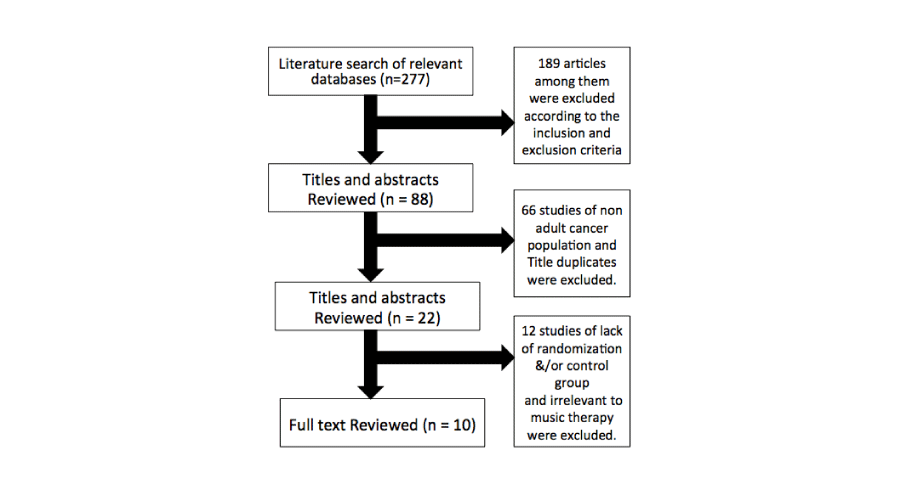
Initially, 277 articles were collected and 88 articles among them were included according to the inclusion and exclusion criteria. The titles and abstracts were then read one by one. 10 articles were selected for the final review and delivered on one occasion [15-24]. Most of the studies (90%) reported significantly emotion improvement after music treatment compared with the control group. Only one study (10%), however, reported no significance between the two groups. The effects of music intervention mentioned in the included studies were analyzed in detail as follows.(Figure 1)
Discussion
Our review aims to summarize and analyze evidence based proof of effectiveness of music intervention on the management of emotional stress in cancer patients. As presented in the results of included studies, well-structured, trained and organized music intervention showed better effects on the quality of life and emotion improvement in cancer patients. However, there is no clear clinical practice guidelines used in the clinical study [25-28]. Thus, standard is recommended for the intervention quality control, in which the researchers can reduce the dropout rate reported in previous studies [29,30].
The included 10 studies were all random assignments and specified eligible criteria. Only one study reported double blind trial, namely blind subjects and blind therapists. Thus, the placebo effects could not be ignored in the majority of studies. The interventions applied in the studies varied in content, duration, and dose. Most interventions were individualized according to the needs of subjects and therapists.
Through this review, despite having limited investigations in this field, we found that a much stricter methodology should be highlighted and paid attention to [31]. In addition, diverse methodologies were found in the studies which affected the heterogeneity of meta-analysis and review article [32-34]. For example, the present review article could hardly make a conclusion on the effects of music-based intervention due to different cancer types, genders, and measurement tools.
Perspective
Specifically, more conceptual and mechanisms studies of this field are needed. To get an optimal intervention for cancer populations, it is urgent for the researchers to obtain identification of methodological components because inconsistencies would block the development of music therapy. Different results from various studies, which might contribute to various cancer types, different cancer stages, various treatments, and different intervention durations, should be explored for the psychological beneficial of cancer patients in the future investigations. Additionally, theoretical framework, which can provide rationale for the intervention of cancer patients, should also be highlighted and paid attention to. Homogenous populations, including cancer types and cancer stages, and intervention durations, should be considered for the future clinical translation.
- Desplenter F, Bond C, Watson M, Burton C, Murchie P, et al. (2012) Incidence and drug treatment of emotional distress after cancer diagnosis: a matched primary care case-control study. Br J Cancer 107: 1644-1651 .
- Iwamitsu Y, Shimoda K, Abe H, Tani T, Okawa M, et al. (2005) The relation between negative emotional suppression and emotional distress in breast cancer diagnosis and treatment. Health Commun 18: 201-215 .
- Anton S, Gugić D, Katinić K, Topić J (2015) Efficasy of Different Psychiatric Treatment Methods of Liaison Psychiatrist in Treatment of Women with Breast Cancer. Coll Antropol 39: 377-383 .
- Norberg AL, Lindblad F, Boman KK (2005) Parental traumatic stress during and after paediatric cancer treatment. Acta Oncol 44: 382-388 .
- Carter J, Rowland K, Chi D, Brown C, Abu-Rustum N, et al. (2005) Gynecologic cancer treatment and the impact of cancer-related infertility. Gynecol Oncol 97: 90-95 .
- Levine EG, Eckhardt J, Targ E (2005) Change in post-traumatic stress symptoms following psychosocial treatment for breast cancer. Psychooncology 4: 618-635 .
- Mackereth P, Farrell C, Bardy J, Molassiotis A, Finnegan-John J (2015) Legitimising fatigue after breast-cancer treatment. Br J Nurs 24: S4, S6, S8-12 .
- Darkow T, Maclean R, Joyce GF, Goldman D, Lakdawalla DN (2012) Coverage and use of cancer therapies in the treatment of chronic myeloid leukemia. Am J Manag Care 18: S272-278 .
- Wright M (2005) Children receiving treatment for cancer and their caregivers: a mixed methods study of their sleep characteristics. Pediatr Blood Cancer 56: 638-645 .
- Eckhouse DR, Hurd M, Cotter-Schaufele S, Sulo S, Sokolowski M, et al. (2014) A randomized controlled trial to determine the effects of music and relaxation interventions on perceived anxiety in hospitalized patients receiving orthopaedic or cancer treatment. Orthop Nurs 33: 342-351 .
- Lai WS, Chao CS, Yang WP, Chen CH (2010) Efficacy of guided imagery with theta music for advanced cancer patients with dyspnea: a pilot study. Biol Res Nurs 12: 188-197 .
- Lotufo PA (2003) The noise stops you from hearing good music: the possibilities for a mortality reduction program for cancer of the colon and rectum in Sao Paulo. Sao Paulo Med J 121: 95-96 .
- Fagerlund A, Cormio L, Palangi L, Lewin R, Santanelli di Pompeo F, et al. (2015) Gynecomastia in Patients with Prostate Cancer: A Systematic Review. PLoS One 10: e0136094 .
- Karlstad O, Starup-Linde J, Vestergaard P, Hjellvik V, Bazelier MT, et al. (2013) Use of insulin and insulin analogs and risk of cancer - systematic review and meta-analysis of observational studies. Curr Drug Saf 8: 333-348 .
- Binns-Turner PG, Wilson LL, Pryor ER, Boyd GL, Prickett CA (2011) Perioperative music and its effects on anxiety, hemodynamics, and pain in women undergoing mastectomy. AANA J 79: S21-27 .
- Bulfone T, Quattrin R, Zanotti R, Regattin L, Brusaferro S, et al. (2009) Effectiveness of music therapy for anxiety reduction in women with breast cancer in chemotherapy treatment. Holist Nurs Pract 23: 238-242 .
- Burrai F, Micheluzzi V, Bugani V (2014) Effects of live sax music on various physiological parameters, pain level, and mood level in cancer patients: a randomized controlled trial. Holist Nurs Pract 28: 301-311 .
- Hanser SB, Bauer-Wu S, Kubicek L, Healey M, Manola J, et al. (2006) Effects of a music therapy intervention on quality of life and distress in women with metastatic breast cancer. J Soc Integr Oncol 4: 116-124 .
- Liao J, Yang YF, Cohen L, Zhao YC, Xu Y (2013) Effects of Chinese medicine five-element music on the quality of life for advanced cancer patients: a randomized controlled trial. Chin J Integr Med 19: 736-740 .
- Palmer JB, Lane D, Mayo D, Schluchter M, Leeming R (2015) Effects of Music Therapy on Anesthesia Requirements and Anxiety in Women Undergoing Ambulatory Breast Surgery for Cancer Diagnosis and Treatment: A Randomized Controlled Trial. J Clin Oncol 33: 3162-3168 .
- Wang Y, Tang H, Guo Q, Liu J, Liu X, et al. (2015) Effects of Intravenous Patient-Controlled Sufentanil Analgesia and Music Therapy on Pain and Hemodynamics after Surgery for Lung Cancer: A Randomized Parallel Study. J Altern Complement Med 21: 667-762 .
- Vachiramon V, Sobanko JF, Rattanaumpawan P, Miller CJ (2013) Music reduces patient anxiety during Mohs surgery: an open-label randomized controlled trial. Dermatol Surg 39: 298-305 .
- Zhao P (2008) Intervention effects of musical therapy to physiological and psychological conditions in process of radiotherapy for patients with cancer. Chin J Cancer Prev Treat 15: 1097-1099.
- Zhou KN, Li XM, Yan H, Dang SN, Wang DL (2011) Effects of music therapy on depression and duration of hospital stay of breast cancer patients after radical mastectomy. Chin Med J (Engl) 124: 2321-2327 .
- Austin D (2010) The psychophysiological effects of music therapy in intensive care units. Paediatr Nurs 22: 14-20 .
- Abrams B (2010) Evidence-based music therapy practice: an integral understanding. J Music Ther 47:351-79 .
- Chlan L, Tracy MF (1999) Music therapy in critical care: indications and guidelines for intervention. Crit Care Nurse 19: 35-41.
- Roach JA, Langdon ME, DeFalco R, George CJ (2014) Using music to maintain the correct rhythm during CPR. Nurs Times 110: 12-15 .
- Kraus N1, Hornickel J, Strait DL, Slater J, Thompson E (2014) Engagement in community music classes sparks neuroplasticity and language development in children from disadvantaged backgrounds. Front Psychol 5: 1403 .
- Maratos AS, Gold C, Wang X, Crawford MJ (2008) Music therapy for depression. Cochrane Database Syst Rev (1): CD004517 .
- Popescu M, Otsuka A, Ioannides AA (2004) Dynamics of brain activity in motor and frontal cortical areas during music listening: a magnetoencephalographic study. Neuroimage 21: 1622-1638 .
- Lewis-Mikhael AM, Bueno-Cavanillas A2, Ofir Guiron T3, Olmedo-Requena R2, Delgado-Rodríguez M, et al. (2016) Occupational exposure to pesticides and prostate cancer: a systematic review and meta-analysis. Occup Environ Med 73: 134-144 .
- Gerrald KR, Van Scoyoc E, Wines RC, Runge T, Jonas DE (2012) Saxagliptin and sitagliptin in adult patients with type 2 diabetes: a systematic review and meta-analysis. Diabetes Obes Metab 14: 481-492 .
- Di Ciommo V, Russo P, Ravà L, Caprino L (2003) Interferon alpha in the treatment of chronic hepatitis C in children: a meta-analysis [correction of metanalysis]. J Viral Hepat 10: 210-214 .


 Save to Mendeley
Article Alerts
Subscribe to our articles alerts and stay tuned.
 This work is licensed under a Creative Commons Attribution 4.0 International License.