Annals of Psychiatry and Treatment
Epidemiology of psychiatric disorders treated at the Thiaroye National Psychiatric Hospital (Senegal)
1Service de Neurologie et de Psychiatrie infantile, Centre hospitalier national d’enfants Albert Royer, Dakar-Sénégal
2Centre hospitalier national psychiatrique de Thiaroye, Dakar-Sénégal
3Clinique des Neurosciences Ibrahima Pierre Ndiaye, Dakar-Sénégal
4Service de Neurologie et de Neuropédiatrie, Hôpital de la Paix, Ziguinchor-Sénégal
5Service de Psychiatrie et Laboratoire de Neurophysiologie, Université Gaston Berger, Saint-Louis, Sénégal
Author and article information
Cite this as
Guene A, et al. Epidemiology of psychiatric disorders treated at the Thiaroye National Psychiatric Hospital (Senegal). Ann Psychiatry Treatm. 2026; 10(1): 36-41. Available from: 10.17352/apt.000073
Copyright License
© 2026 Guene A, et al. This is an open-access article distributed under the terms of the Creative Commons Attribution License, which permits unrestricted use, distribution, and reproduction in any medium, provided the original author and source are credited.Introduction: Mental disorders represent a major public health issue in sub-Saharan Africa. This study aims to analyse the socio-demographic profile and clinical course of psychiatric conditions treated at the CHNPT between 2012 and 2021.
Methods: A retrospective descriptive study covering all patients admitted to the four wards of the CHNPT over 10 years. Data were extracted from registers and annual reports and analysed using Excel 2019.
Results: A total of 13,891 patients were included. The population showed a clear predominance of males (69 per cent) and a high proportion of young people aged between 15 and 49 (86.11 per cent). The predominant diagnostic categories among hospital admissions were chronic psychoses (42.31 per cent), mood disorders (20.79 per cent) and psychoactive substance-related disorders (19.63 per cent), followed by acute psychoses (12.89 per cent), epilepsy (2.35 per cent) and neurotic disorders (2.03 per cent). A significant decline in hospital admissions was observed in 2020 during the Covid-19 pandemic.
Conclusion: The typical profile of the hospitalised patient is a young man, predominantly suffering from chronic psychosis. Strengthening the mental health care network and implementing targeted prevention strategies among young people is a priority.
Mental disorders are a major public health concern worldwide, characterised by high prevalence and often an early onset during human development. In the United States, national epidemiological data reveal that nearly half the population meets the criteria for at least one psychiatric disorder during their lifetime, with the majority of first episodes occurring as early as childhood or adolescence [1]. In Europe, the large-scale ESEMeD study (European Study of Epidemiology of Mental Disorders) confirms the scale of this burden on health by showing that one in four adults has a history of a mental disorder during their lifetime, with major depressive episodes and specific phobias being the most common conditions [2]. This European study also highlights marked gender disparities, with women being twice as likely to be affected by anxiety and mood disorders, whilst men are more vulnerable to alcohol-related disorders.
However, the shift towards developing countries reveals specific epidemiological and organisational realities, where the growing demand for care is coming up against health systems that remain under strain. In North Africa, as evidenced by data from Algeria, the rising prevalence of psychiatric conditions now places these disorders sixth among the most common chronic diseases in the population [3]. This growing epidemiological burden is, however, hampered by the limitations of a healthcare system that remains heavily institutionalised, centred on the curative management of crises and characterised by a marked lack of psychosocial rehabilitation and post-treatment support services [3].
In sub-Saharan Africa, the profile of patients treated in specialist facilities reflects the region’s specific demographic and social characteristics. For instance, a retrospective analysis carried out at the Kissy Psychiatric Hospital in Sierra Leone shows that the majority of consultations involve young, male, unmarried individuals, for whom disorders due to the use of psychoactive substances are the leading cause of diagnosis (38.9 per cent), followed by schizophrenia (25.1 per cent) and mood disorders (19.0 per cent) [4]. A detailed examination of this West African cohort also confirms the persistence of gender differences, characterised by a statistically significant female predominance for mood disorders [4].
This clinical dynamic is particularly acute when it comes to accessing emergency services, where the hospital is very often the last resort for families. In Niger, research carried out at the Zinder National Hospital reports an in-hospital prevalence of mental disorders of 6.7 per cent, with acute psychomotor agitation being by far the most common reason for admission [5]. Finally, the initial therapeutic response provided in these centres most often relies on rapid parenteral sedation on admission, but faces a major challenge in terms of continuity of care, reflected in a high dropout rate during outpatient follow-up [5].
Designated as a Level 3 Public Health Establishment, the Centre Hospitalier National de Thiaroye (CHNPT) is a national and sub-regional centre of excellence for the management of mental disorders in Senegal. While community-based epidemiological studies remain sparse in the region, evaluating hospital-based admission patterns provides vital operational evidence regarding severe psychiatric morbidity. This study aims to outline the sociodemographic profile and clinical course of patients admitted to the CHNPT over ten years (2012–2021).
Materials and methods
Study design and population
This is a retrospective, descriptive and analytical study conducted at the CHNPT, a secure psychiatric hospital with a capacity of 109 inpatient beds.
The study included all patients admitted to the four wards (1, 2, 3 and 4) between 1 January 2012 and 31 December 2021.
Data collection and analysis
Data were extracted from standardized admission registers and annual institutional reports using a structured data collection sheet. Variables recorded included basic sociodemographic parameters (gender, age categorized into standardized age brackets: 0–14, 15–49, and ≥ 50 years) and primary clinical diagnoses.
Data analysis and entry were carried out using Microsoft Excel (version 2019). Descriptive statistical procedures were utilized to summarize the data. Categorical variables were presented as absolute counts (n) and relative percentages (%). Annual admission volume trends were mapped longitudinally. No inferential statistical hypothesis testing or bivariate/multivariable modeling was performed, given the descriptive and aggregated nature of the tertiary hospital registry dataset.
Results
Overall volume and trends in annual patient numbers
Over the entire ten-year study period (1 January 2012 to 31 December 2021), a total of 13,891 inpatients were recorded at the CHNPT, representing an annual average of nearly 1,397 admissions.
Analysis of the annual trend in hospital admissions shows relative stability during the early years, followed by a marked decline from 2019 onwards, reaching its lowest level in 2020 before beginning to recover in 2021 (Figure 1).
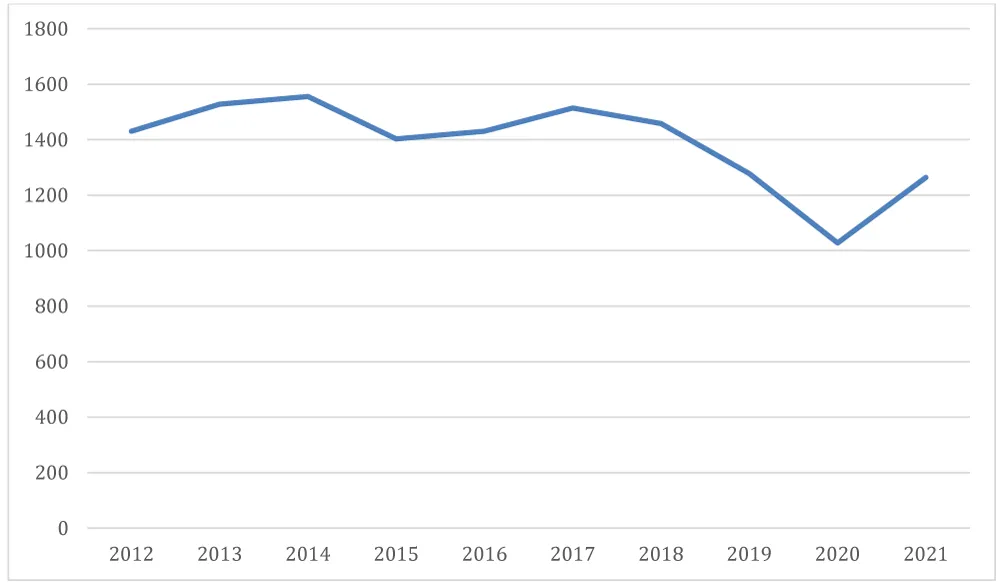
This decline observed between 2019 and 2020 coincides with the emergence of the COVID-19 pandemic, characterised by the introduction of public health restrictions, curfews and restrictions on inter-regional travel.
Socio-demographic characteristics
- Breakdown by Gender
The study population is characterised by a clear predominance of men (69% of admissions).
- Distribution by age group
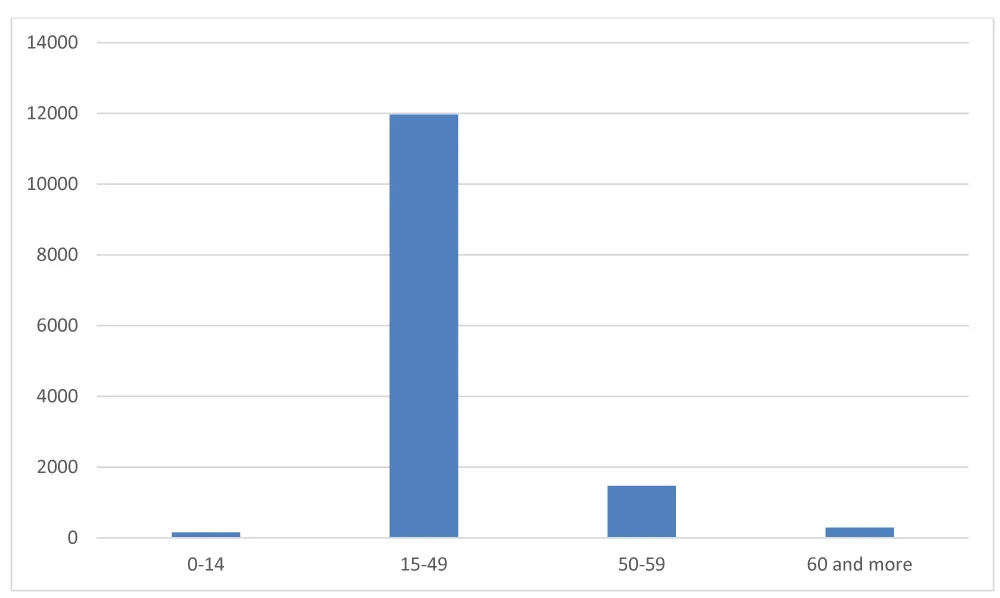
Young adults make up the vast majority of patients admitted to the CHNPT (86.11 per cent aged 15–49). The extreme age groups are very under-represented in the study population (Figure 2).
Nosological breakdown of the conditions encountered
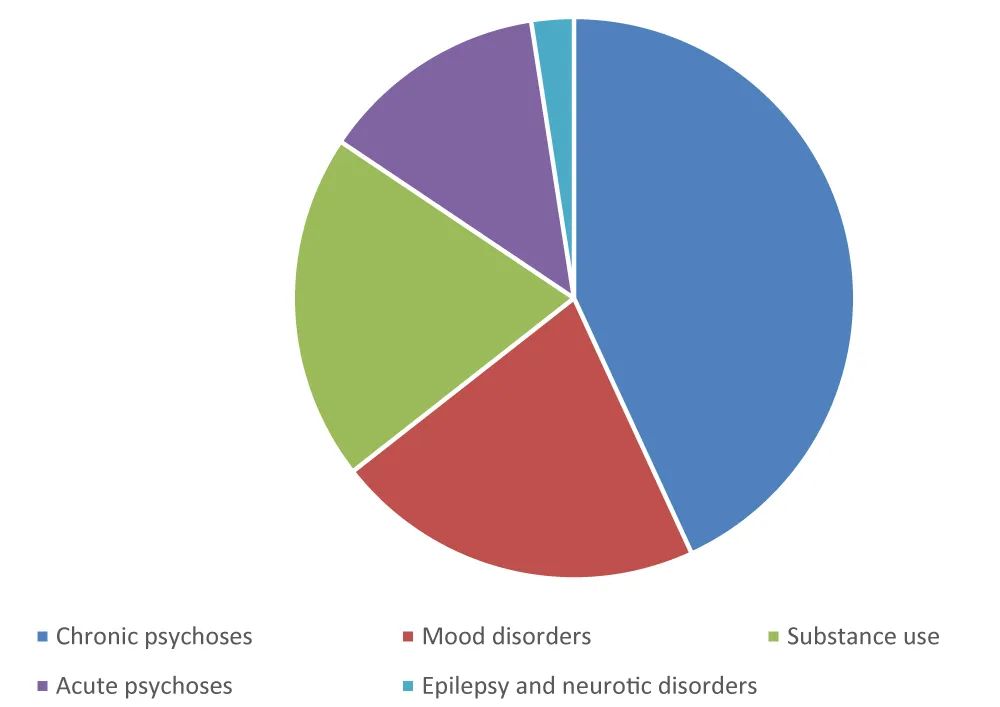
Chronic psychoses are the leading cause of hospitalisation, followed by mood disorders and mental and behavioural disorders associated with the use of psychoactive substances.
Within the category of chronic psychoses, schizophrenia is the most common condition, accounting for nearly 38 per cent of all hospital admissions (Figure 3). Among substance-related disorders, cannabis-induced psychosis is by far the most prevalent (18.3 per cent), ahead of alcohol-related disorders (1.3 per cent).
Breakdown of conditions by gender
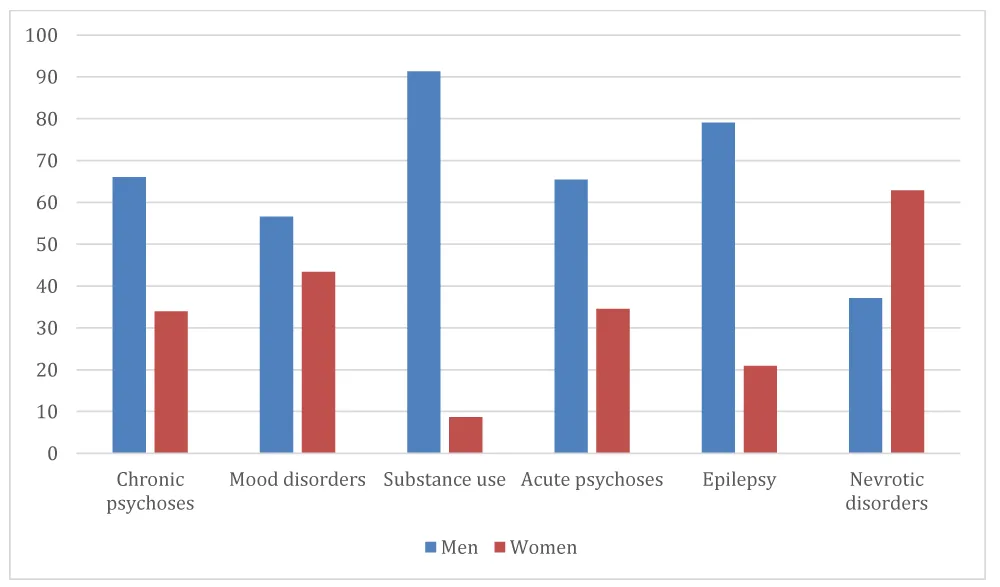
Except for neurotic disorders, where female cases are predominant (62.86 per cent), all other nosological groups predominantly affect the male population. The predominance of men is particularly striking in the substance abuse group (91.31 per cent) and among those with epilepsy (79.10 per cent).
For depression considered in isolation within mood disorders, the distribution is reversed in favour of women, who account for 55.3 per cent of hospital admissions for depressive episodes (Figure 4).
Distribution of conditions by age group
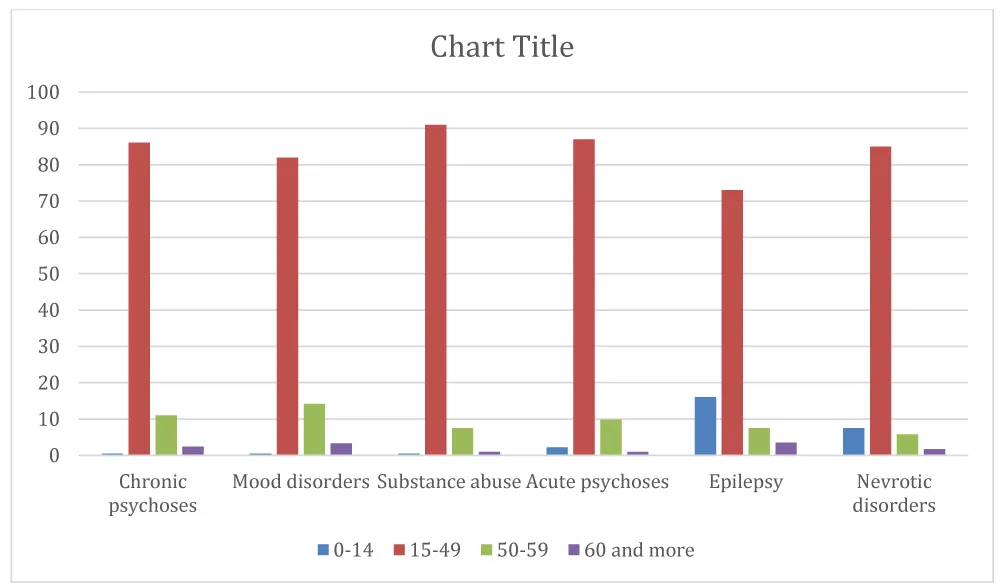
The 15–49 age group has the highest proportions for all categories of conditions (Figure 5). Epilepsy stands out for its notable prevalence among children and adolescents aged 0 to 14 (16.0 per cent)
Dynamic trends in conditions over the years
The nosological hierarchy has remained remarkably consistent throughout the decade:
- Chronic psychoses: These have consistently ranked first among admissions for each year observed, accounting for between 37 per cent and 48 per cent of annual reasons for hospitalisation.
- Mood disorders: These predominantly occupied second place in the annual nosological ranking (particularly in 2014, 2015, 2017, 2018, 2019 and 2021), accounting for between 17 per cent and 26 per cent of annual cases.
- Substance abuse: This ranks second or third depending on the year, fluctuating within a range of 16 per cent to 22 per cent.
- Acute psychoses: These consistently rank third or fourth, with an annual frequency of between 11 per cent and 20 per cent.
- Epilepsy and neurotic disorders: These two groups remained marginally represented in the CHNPT’s inpatient care setting throughout the ten-year observation period, staying below the 4 per cent annual threshold.
Discussion
Age- and gender-related vulnerability
- Overall over-representation of young men
The population admitted to the CHNPT is characterised by a strong majority of men (69 per cent) and a high concentration of young people aged 15 to 49 (86.11 per cent).
This age profile aligns directly with life-course developmental literature, which identifies a major peak in the initial onset of major psychiatric disorders during the transition from late adolescence to young adulthood. The excess vulnerability observed among men in hospital admissions may be contextually interpreted through the lens of heightened clinical severity or acute behavioral disruption among young men during this pivotal developmental period, leading to a massive demand for emergency and inpatient care [6].
- The prevalence of schizophrenia and the clinical impact of social isolation
Chronic psychoses were the leading reason for admission (42.31 per cent), with schizophrenia alone accounting for nearly 38 per cent of all hospitalisations.
In light of international literature, the prognostic impact of social isolation in schizophrenia provides valuable contextual insight: men with schizophrenia frequently exhibit a more pronounced lack of relational connectivity than women (82 per cent unmarried in similar observational cohorts) and report higher subjective loneliness scores. In males, severe social isolation has been linked to greater severity of psychopathology and negative symptoms, which may contribute to illness chronicity and plausibly explain the pattern of recurrent hospitalizations observed in our facility [7].
- Vulnerability to toxic substances: the role of cannabis-induced psychosis
Substance abuse is the third most common reason for hospitalisation (19.63 per cent), with the most overwhelming male predominance in the study (91.31 per cent). Cannabis-induced psychosis is significantly more prevalent (18.3 per cent) than alcohol-related disorders (1.3 per cent).
These findings are consistent with studies confirming that men experience a very high peak in the incidence of drug-use disorders between the ages of 15 and 54, reflecting increased novelty-seeking and risk-taking behaviours. Within the local context, severe cannabis misuse among late adolescents may act as a critical triggering or exacerbating factor for acute psychotic decompensation, driving hospital presentations.
- Atypical clinical presentation of mood disorders in young males
Mood disorders rank second (20.79 per cent). Whilst the distribution is reversed for isolated depressive episodes, with women accounting for 55.3 per cent of cases, men nevertheless represent a high overall proportion of patients hospitalised for mood disorders.
Literature on developmental psychopathology sheds light on potential drivers behind male mood-related hospitalisations: during a major depressive episode, young males frequently present with prominent mixed, manic, or externalising symptoms (17.0 per cent compared with 7.7 per cent in females), manifesting as severe irritability, distractibility, and psychomotor agitation. This presentation, often accompanied by comorbidity, increases clinical complexity and acute risk, thereby increasing the likelihood of inpatient hospital admission [8].
Prevalence of psychotic disorders
An analysis of admission reasons reveals that chronic psychoses rank first overall (42.31 per cent of cases), with schizophrenia accounting for nearly 38 per cent of total hospitalisations, predominantly affecting young individuals aged 15–49 (86.11 per cent).
This marked representation of schizophrenia spectrum disorders among young inpatients is consistent with global models of the peak age of onset for major mental illnesses. Meta-analytic evidence confirms that the peak incidence of schizophrenia spectrum disorders occurs around 20.5 years of age, with nearly half (47.8 per cent) of cases developing before age 25 [9]. The large number of young patients admitted to the CHNPT for chronic psychosis reflects this critical neurodevelopmental window.
While our dataset reflects hospital admission frequency rather than true community incidence, capturing these long-term clinical trends at a major national facility contributes useful empirical data from sub-Saharan Africa—a region where population-level psychiatric registries remain severely limited [10].
Furthermore, while published international studies report heightened relative risk for psychotic disorders among populations of African descent in diaspora settings [11], our single-center hospital observations cannot establish differential population-level vulnerability. Instead, the high proportion of psychoses at CHNPT highlights the role of the hospital as a primary referral center for managing severe, uncontained behavioral disturbances, underscoring the need to investigate local social, environmental, and healthcare access determinants.
Impact of the COVID-19 pandemic
- The sharp fall in hospital admissions in 2020: A global phenomenon confirmed at local level
An analysis of admission reasons reveals that chronic psychoses rank first overall (42.31 per cent of cases), with schizophrenia accounting for nearly 38 per cent of total hospitalisations, predominantly affecting young individuals aged 15–49 (86.11 per cent).
This marked representation of schizophrenia spectrum disorders among young inpatients is consistent with global models of the peak age of onset for major mental illnesses. Meta-analytic evidence confirms that the peak incidence of schizophrenia spectrum disorders occurs around 20.5 years of age, with nearly half (47.8 per cent) of cases developing before age 25 [9]. The large number of young patients admitted to the CHNPT for chronic psychosis reflects this critical neurodevelopmental window.
While our dataset reflects hospital admission frequency rather than true community incidence, capturing these long-term clinical trends at a major national facility contributes useful empirical data from sub-Saharan Africa—a region where population-level psychiatric registries remain severely limited [10].
Furthermore, while published international studies report heightened relative risk for psychotic disorders among populations of African descent in diaspora settings [11], our single-center hospital observations cannot establish differential population-level vulnerability. Instead, the high proportion of psychoses at CHNPT highlights the role of the hospital as a primary referral center for managing severe, uncontained behavioral disturbances, underscoring the need to investigate local social, environmental, and healthcare access determinants.
- The unwavering prevalence of chronic psychoses
An analysis of admission reasons reveals that chronic psychoses rank first overall (42.31 per cent of cases), with schizophrenia accounting for nearly 38 per cent of total hospitalisations, predominantly affecting young individuals aged 15–49 (86.11 per cent).
This marked representation of schizophrenia spectrum disorders among young inpatients is consistent with global models of the peak age of onset for major mental illnesses. Meta-analytic evidence confirms that the peak incidence of schizophrenia spectrum disorders occurs around 20.5 years of age, with nearly half (47.8 per cent) of cases developing before age 25 [9]. The large number of young patients admitted to the CHNPT for chronic psychosis reflects this critical neurodevelopmental window.
While our dataset reflects hospital admission frequency rather than true community incidence, capturing these long-term clinical trends at a major national facility contributes useful empirical data from sub-Saharan Africa—a region where population-level psychiatric registries remain severely limited [10].
Furthermore, while published international studies report heightened relative risk for psychotic disorders among populations of African descent in diaspora settings [11], our single-center hospital observations cannot establish differential population-level vulnerability. Instead, the high proportion of psychoses at CHNPT highlights the role of the hospital as a primary referral center for managing severe, uncontained behavioral disturbances, underscoring the need to investigate local social, environmental, and healthcare access determinants.
- The rise in mood disorders and the persistence of acute psychoses
Mood disorders and acute psychoses continued to represent substantial proportions of annual admissions during 2020 and 2021. In published literature, acute stress reactions, economic distress, and post-viral neuroinflammatory mechanisms have been discussed as potential contributors to elevated affective and brief psychotic presentations during the global pandemic period [16]. In our hospital cohort, these temporal patterns suggest that acute affective and psychotic crises remained primary drivers of emergency psychiatric evaluation.
Strengths and limitations
This study possesses notable strengths, including a large sample size (N = 13,891) spanning a continuous 10-year observation period at Senegal’s primary national psychiatric hospital. However, several methodological limitations must be considered when interpreting the findings:]
- Hospital-Based Design and Selection Bias: The data reflect inpatient admissions at a tertiary specialized facility. Consequently, the study population is inherently skewed toward severe, acute, or behaviorally disruptive conditions (e.g., psychoses, severe mania, and substance-induced agitation). Milder psychiatric disorders, neurotic conditions, and stable chronic cases managed in outpatient clinics, primary healthcare centers, or traditional/faith-healing settings are significantly under-represented.
- Retrospective Administrative Record Reliance: Data were extracted from paper registers and institutional reports. The accuracy and detail of variables were constrained by the completeness of routine medical record-keeping.
- Diagnostic Classification: Diagnoses were based on clinical assessments recorded in hospital registers by attending medical staff without the use of standardized, structured diagnostic instruments (e.g., SCID or MINI).
- Lack of Population Denominators: Because the data are hospital-derived without a defined population denominator, true epidemiological measures such as incidence rates or population prevalence cannot be calculated.
- Absence of Community Data: The study lacks community-level context, precluding conclusions regarding the true prevalence or burden of mental disorders in the general Senegalese population.
- Limited Generalizability: Findings from this single national tertiary center in Dakar may not be generalizable to rural populations or primary care healthcare settings across Senegal.
Conclusion
This retrospective study, conducted over ten years at the Thiaroye National Psychiatric Hospital (CHNPT), highlights the scale and persistence of the burden of psychiatric disorders in Senegal, represented by a total of 13,891 hospital admissions.
The predominant epidemiological profile that emerges is that of a young adult male, aged between 15 and 49, suffering mainly from chronic psychosis; schizophrenia alone accounts for nearly 38 per cent of all hospitalisations. The study also confirms the significant prevalence of addictive behaviours, dominated by cannabis-induced psychosis among young men, as well as women’s specific vulnerability to depressive and neurotic disorders. The temporal analysis reveals the direct impact of global health crises, evidenced by the decline in admissions during the COVID-19 pandemic in 2020, followed by a rapid rebound illustrating the severity and inescapable nature of the need for ongoing psychiatric care.
These findings highlight the urgent need to strengthen mental health policies in sub-Saharan Africa. It appears to be a priority to establish prevention programmes targeting substance use among adolescents, to develop early intervention schemes for first psychotic episodes, and to promote the decentralisation of care through the creation of psychosocial rehabilitation facilities and outpatient follow-up units as close as possible to local communities.
- Kessler RC, Wang PS. The descriptive epidemiology of commonly occurring mental disorders in the United States. Annu Rev Public Health. 2008;29:115-29. Available from: doi:10.1146/annurev.publhealth.29.020907.090847.
- ESEMeD/MHEDEA 2000 Investigators. Prevalence of mental disorders in Europe: results from the European Study of the Epidemiology of Mental Disorders (ESEMeD) project. Acta Psychiatr Scand. 2004;109 Suppl 420:21-7. Available from: doi:10.1111/j.1600-0047.2004.00327.x.
- Seridi MEM, Belaadi B. État des lieux des troubles mentaux et de leur prise en charge en Algérie. East Mediterr Health J. 2022;28(7):532-8. Available from: doi:10.26719/emhj.22.054.
- Eze GO, Onyishi NT, Nnaji FC, Kromba K. Epidemiology and pattern of mental health (psychiatric) disorders in Sierra Leone: a retrospective cross-sectional study of 4020 cases. Niger Med J. 2025;66(3):942-52. Available from: doi:10.71480/nmj.v66i3.680.
- Moussa D, Georges Thomas A, et al. Aspects épidémiologiques des troubles mentaux au service de psychiatrie de l'Hôpital National de Zinder au Niger. J Sah Sci Sante. 2025;5(1):1353-60.
- Yang Y, Fang F, Arnberg FK, et al. Sex differences in clinically diagnosed psychiatric disorders over the lifespan: a nationwide register-based study in Sweden. Lancet Reg Health Eur. 2024;47:101105. Available from: doi:10.1016/j.lanepe.2024.101105.
- Chi J, Liu N, Tian T. Sex differences in loneliness, social isolation, and their impact on psychiatric symptoms and cognitive functioning in schizophrenia. BMC Psychiatry. 2024;24:894. Available from: doi:10.1186/s12888-024-06333-7.
- Apicella M, Andracchio E, Della Santa G, Lanza C, Guidetti C, Trasolini M, et al. Sex differences in pediatric major depressive episodes: a cross-sectional study on psychiatric symptoms in early-onset mood disorders. Front Psychiatry. 2025;16:1503794. Available from: doi:10.3389/fpsyt.2025.1503794.
- Solmi M, Radua J, Olivola M, et al. Age at onset of mental disorders worldwide: large-scale meta-analysis of 192 epidemiological studies. Mol Psychiatry. 2022;27:281-95. Available from: doi:10.1038/s41380-021-01161-7.
- John-Baptiste Bastien R, Ding T, Gonzalez-Valderrama A, et al. The incidence of non-affective psychotic disorders in low and middle-income countries: a systematic review and meta-analysis. Soc Psychiatry Psychiatr Epidemiol. 2023;58:523-36. Available from: doi:10.1007/s00127-022-02397-6.
- Chung W, Jiang SF, Milham MP, et al. Inequalities in the incidence of psychotic disorders among racial and ethnic groups. Am J Psychiatry. 2023;180:805-14. Available from: doi:10.1176/appi.ajp.20220917.
- Joo SW, Kim H, Jo YT, et al. Impact of the early phase of the COVID-19 pandemic on the use of mental health services in South Korea: a nationwide, health insurance data-based study. Soc Psychiatry Psychiatr Epidemiol. 2023;58:441-52. Available from: doi:10.1007/s00127-022-02382-z.
- Prina E, et al. Effect of COVID-19 pandemic on utilisation of community-based mental health care in North-East of Italy: a psychiatric case register study. Epidemiol Psychiatr Sci. 2023;32:e17:1-8. Available from: doi:10.1017/S2045796023000100.
- Beghi M, Ferrari S, Biondi L, et al. Mid-term psychiatric consequences of the COVID-19 pandemic: a 4-month observational study on emergency room admissions for psychiatric evaluation after the (first) lockdown period in Italy. Soc Psychiatry Psychiatr Epidemiol. 2022;57:1283-9. Available from: doi:10.1007/s00127-022-02262-6.
- Molero P, Reina G, Blom JD, Martínez-González MÁ, Reinken A, de Kloet ER, et al. COVID-19 risk, course and outcome in people with mental disorders: a systematic review and meta-analyses. Epidemiol Psychiatr Sci. 2023;32:e61:1-16. Available from: doi:10.1017/S2045796023000719.
- Mazza MG, Palladini M, et al. Post-COVID-19 depressive symptoms: epidemiology, pathophysiology, and pharmacological treatment. CNS Drugs. 2022;36:681-702. Available from: doi:10.1007/s40263-022-00931-3.



 Save to Mendeley
Article Alerts
Subscribe to our articles alerts and stay tuned.
 This work is licensed under a Creative Commons Attribution 4.0 International License.