Annals of Psychiatry and Treatment
Practice and Perceptions of Alternative Psychotherapies in Pediatric Oncology: Experience from the Pediatric Oncology Unit at Aristide Le Dantec Hospital in Dakar
1Service de Psychiatrie et de Neurologie infantiles, Centre hospitalier national des enfants Albert Royer, Dakar, Sénégal
2Unité d’Oncopédiatrie, Centre Hospitalier national universitaire Aristide Le Dantec, Dakar, Sénégal
3Service de Pédiatrie CHNU Dalal Jamm, Sénégal
Author and article information
Abibatou Guene, Service de Neurologie et Psychiatrie infantile, Centre Hospitalier National d’enfants Albert Royer, Dakar, Sénégal, E-mail: [email protected]
Cite this as
El Hadji Makhtar BA, et al. Practice and Perceptions of Alternative Psychotherapies in Pediatric Oncology: Experience from the Pediatric Oncology Unit at Aristide Le Dantec Hospital in Dakar. Ann Psychiatry Treatm. 2026; 10(1): 42-47. Available from: 10.17352/apt.000074
Copyright License
© 2026 El Hadji Makhtar BA, et al. This is an open-access article distributed under the terms of the Creative Commons Attribution License, which permits unrestricted use, distribution, and reproduction in any medium, provided the original author and source are credited.Introduction: A pediatric cancer diagnosis is a major psychological ordeal for the child and his or her family. This study aims to evaluate the integration, participation, and perception of alternative psychotherapies (art therapy, storytelling therapy, psychomotor therapy, and playgroups) within the Pediatric Oncology Unit (UOP) at Aristide Le Dantec Hospital in Dakar.
Materials and Methods: This was a prospective, cross-sectional, descriptive study conducted from January 1, 2021, to August 1, 2022 (20 months) among 87 patients treated at the UOP and their caregivers. Sociodemographic and clinical data, as well as assessments of treatments, were collected through telephone interviews and analyzed using Epi Info v7.
Results: The mean age of the children was 8.1 ± 3.8 years, with a male-to-female ratio of 1.1. The majority of patients lived in rural areas (55.2%) and were primarily diagnosed with acute leukemia (42.5%) or nephroblastoma (28.7%). Mothers accounted for 58.8% of respondents. Attendance was particularly high for art therapy (97.7%) and psychomotor therapy (90.8%). Art therapy was identified as the most beneficial (71.3%). A high level of satisfaction was reported (90.8%), and 97.7% of respondents perceived an improvement in the child’s psychological state (mean score of 8.0 ± 1.8 out of 10).
Conclusion: Alternative psychotherapies provide significant psychosocial benefits in the management of pediatric cancers in Senegal. Increasing the frequency of sessions and strengthening material and human resources remain key priorities for ensuring the long-term sustainability of this program.
Pediatric cancer is the leading cause of disease-related death among children worldwide. Its global annual incidence is approximately 400,000 children and adolescents. In the United States, between 12,500 and 15,780 children under the age of 20 are diagnosed each year, with cancer also being the leading cause of disease-related mortality among children there. Although medical advances and multicenter clinical research protocols have led to five-year survival rates exceeding 80% in high-income countries, the disease and the intensity of treatments impose a major physical and psychosocial burden on patients and their families [1].
This burden is particularly disproportionate in low- and middle-income countries, especially in sub-Saharan Africa (SSA) and the Middle East and North Africa (MENA) region, where cancer care faces significant structural disparities. In sub-Saharan Africa, only 15% of countries have a population-based cancer registry, which significantly limits epidemiological surveillance and care planning. Similarly, in the MENA region, projections predict a major increase in cancer incidence by 2030. Meta-analytic studies reveal an extremely high psychiatric burden among cancer patients in this region, with overall prevalences of 44% for depression, 47% for anxiety, and 43% for psychological distress [2,3].
However, although the Working Group on Human Rights of the International Society of Psycho-Oncology (IPOS) asserts that psychosocial care is a fundamental human right, Africa remains the most underrepresented continent in terms of the organization of psycho-oncological care, with Nigeria being one of the few countries in sub-Saharan Africa to have established a national society of psycho-oncology as early as 2009 [3].
A cancer diagnosis represents a major disruption in the life course of a child and their family, affecting the young patient’s body, emotional experience, and both conscious and unconscious psychological reality. Internationally, at least 25% of children with cancer develop significant mental health disorders (anxiety, depression, PTSD), and up to half of parents experience acute psychological distress at the time of diagnosis [4-6].
Pain in pediatric oncology is part of the concept of “total pain,” in which somatic suffering is intertwined with procedural anxiety and sociocultural factors. In sub-Saharan Africa, the management of this pain faces severe constraints, including legislative restrictions on opioids and the lack of morphine availability in hospitals. Furthermore, the diagnosis is frequently made at an advanced stage of the disease due to multiple barriers: lack of awareness of symptoms, the cost of care, distance from specialized centers, and delays in treatment [3,7,8].
Sociocultural factors play a decisive role in shaping the experience of illness:
- Family structure and collectivism: In Arab-Muslim and African cultures, medical decisions and support rely on the extended family and social circle. However, the fear of bringing dishonor to the family or being stigmatized by the community constitutes an additional source of stress for patients and their loved ones.
- Stigma and taboos: Seeking mental health care remains a widespread taboo in many societies across the MENA region and sub-Saharan Africa. Furthermore, certain conditions associated with increased cancer risk, such as albinism or HIV infection, are subject to significant social stigma, leading patients to delay seeking medical care.
- Instability and armed conflict: In several areas of the MENA region (Palestine, Iraq, Syria), the psychological impact of cancer is greatly exacerbated by trauma related to armed conflict, political instability, and the dismantling of healthcare infrastructure [2,3].
Psychosocial Care Standards, Disparities, and Implementation Challenges. In light of these vulnerabilities, international guidelines recommend the integration of universal psychosocial support, structured according to risk models such as the Pediatric Preventative Psychosocial Health Model (PPPHM).
The effectiveness of targeted interventions has been demonstrated by randomized controlled trials:
- Problem-solving skills training (PSST) and CBT/family programs (SCCIP) [6,8].
- Cognitive-behavioral therapies, music video mediation, and Make-A-Wish programs [5].
- Interventions by pediatric psychologists in the management of procedural pain, cognitive remediation, and grief counseling [6].
However, there is a significant gap between these international standards and their implementation in the Global South. Research in psycho-oncology in the MENA and ASS regions remains largely descriptive and suffers from a lack of intervention studies. Furthermore, most tools for assessing distress (HADS, PHQ-9, BDI) were developed in Western contexts and often lack validation or cultural adaptation to local dialects and perceptions of mental illness. Although pioneering centers of excellence exist, such as the King Hussein Cancer Center in Jordan, the Children’s Cancer Hospital Egypt 57357, and the Tunisian Society of Psycho-Oncology, psycho-oncology services remain highly fragmented and underfunded in most African and Arab countries. It is therefore crucial to train healthcare professionals in psychosocial and palliative care, while building bridges between conventional medicine and community-based and traditional support systems [2,3].
To overcome the barriers to verbalization—which are particularly pronounced in children and reinforced by cultural taboos surrounding mental illness—nonverbal interventions play a central role. Play therapy provides a transitional space where children can reenact traumatic experiences and resume an active role in coping with their illness [2,3,7].
Similarly, Dance/Movement Therapy (DMT), defined as the psychotherapeutic use of movement to promote emotional, physical, cognitive, and social integration, is part of a holistic view of the child and their community (“Whole Child, Whole Family, Whole Staff”). In situations involving painful medical procedures, Multisensory Dance/Movement Psychotherapy (MSDMT) combines movement, music, touch, and breathing to act as an “embodied analgesic.” By redirecting attention away from pain toward soothing bodily sensations, it helps regulate the nervous system and prevent the entrenchment of traumatic memories. This embodied and expressive approach is particularly well-suited to African and Middle Eastern sociocultural contexts, where movement, music, and the body serve as primary channels for emotional regulation and social connection [1,9].
Optimal care for childhood cancer therefore requires integrating medical treatments with international standards of psychosocial care, appropriate psychotherapeutic interventions, and mind-body approaches such as dance/movement therapy.
The objective of this study is to examine how these approaches can be applied in a complementary manner, taking into account the epidemiological realities, structural constraints, and sociocultural specificities of populations in Africa and the MENA region, to provide each child and their family with equitable, humane support tailored to their lived experiences.
Materials and methods
Study setting and population
The study was conducted at the Pediatric Oncology Unit (UOP) of the Aristide Le Dantec University Hospital in Dakar, the only department specializing in pediatric oncology in Senegal at the time of the study.
This was a prospective, cross-sectional, descriptive study conducted over 20 months (from January 1, 2021, to August 1, 2022).
Included were all pediatric cancer patients who had received at least one session of alternative psychotherapy, could be reached by phone, and whose respondent (parent or caregiver) consented to participate.
Over the 20-month study period, 88 group psychotherapy sessions were conducted, accounting for a cumulative total of 894 individual workshop attendances. These attendances corresponded to 264 unique, regular pediatric participants. Of these 264 patients, 88 were deceased before survey administration, 67 lacked valid telephone contacts, and 22 were unreachable. The remaining 87 patients/caregivers were successfully contacted and enrolled (N = 87). Among the 87 included cases, demographic profiles of caregivers were obtained for 68 adult respondents (n = 68), as 19 interviews were completed directly with adolescent patients or non-parental guardians where demographic details were incomplete.
Format of alternative psychotherapies
Sessions took place in a dedicated room, according to the following schedule:
- Art Therapy, Psychomotor Therapy, and Storytelling Therapy: Weekly 2-hour workshops
- Free Play Groups: Weekly interactive workshops
Data collection and analysis
Data were collected using a semistructured questionnaire administered via telephone interviews.
The variables analyzed included sociodemographic characteristics, clinical diagnosis, level of participation, perceived usefulness, satisfaction, and perceived improvement scores (on a numerical scale from 0 to 10). Statistical analysis was performed using EpiInfo software (version 7).
Results
Sociodemographic and clinical profile
During our study period, 88 sessions of alternative psychotherapy were conducted with 894 participants.
Of the 264 regular participants, 88 deaths were recorded, 67 patients had no valid phone contact information, and 22 could not be reached. A total of 87 patients were included in the study.
The mean age was 8.1 ± 3.8 years (range: 2 to 18 years; median: 8 years). There was a slight predominance of males, with a sex ratio (M/F) of 1.1 (52.9% boys).
More than half of the patients lived in rural areas (55.2%), with the majority coming from the regions of Dakar (35.6%) and Diourbel (17.2%).
Regarding the respondents’ educational background, 31.0% had received a Koranic/Arabic education, 29.9% had completed primary school, 17.2% had no formal education, 11.5% had completed secondary school, and 10.3% had completed higher education. (Table 1).
Acute leukemia (42.5%) and nephroblastoma (28.7%) were the most common diagnoses.
Workshop participation and attendance
The average number of sessions attended per patient was 10 ± 6.9 (median: 8; range: 1 to 28 sessions).
- Art therapy: 97.7% participation rate (n=85).
- Psychomotor therapy: 90.8% participation rate (n=79).
- Storytelling therapy: 80.5% participation rate (n=70).
- Free play groups: 47.1% participation rate (n=41).
Assessment of benefits and satisfaction
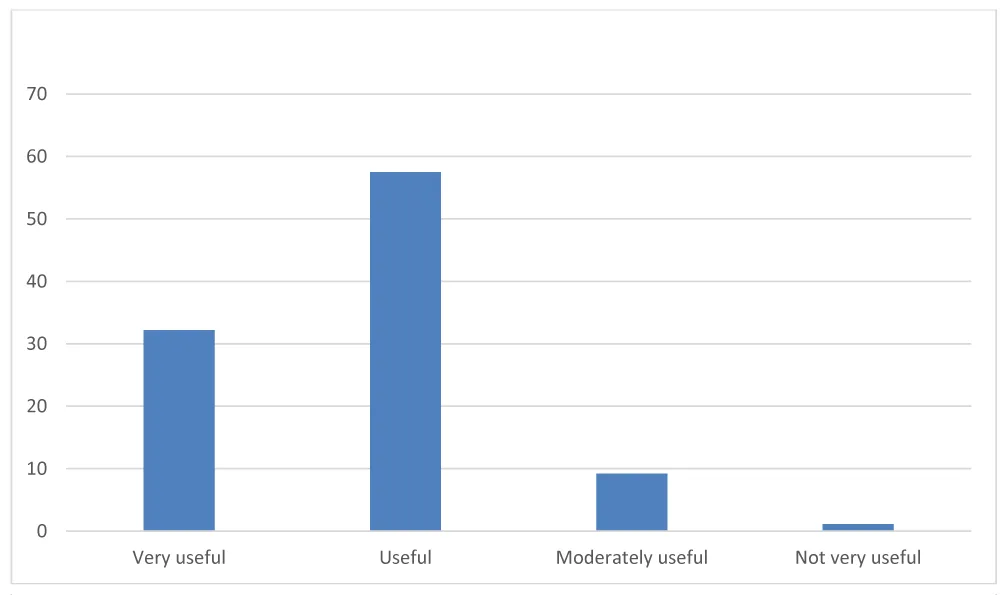
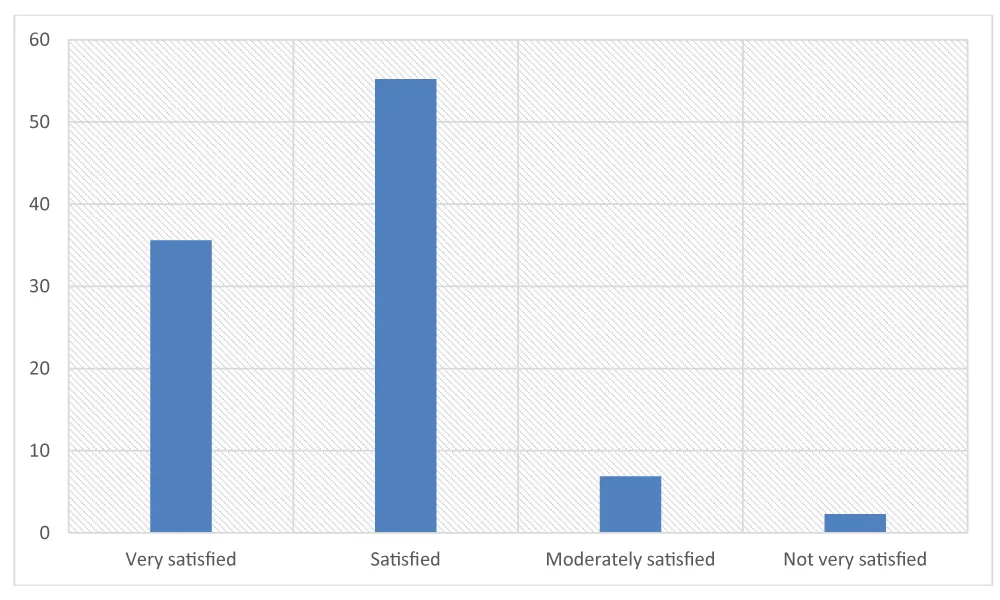
Overall assessment: 89.7% of respondents rated these approaches as “very useful” (32.2%) or “useful” (57.5%). The overall satisfaction rate was 90.8% (35.6% very satisfied and 55.2% satisfied). (Figure 1).
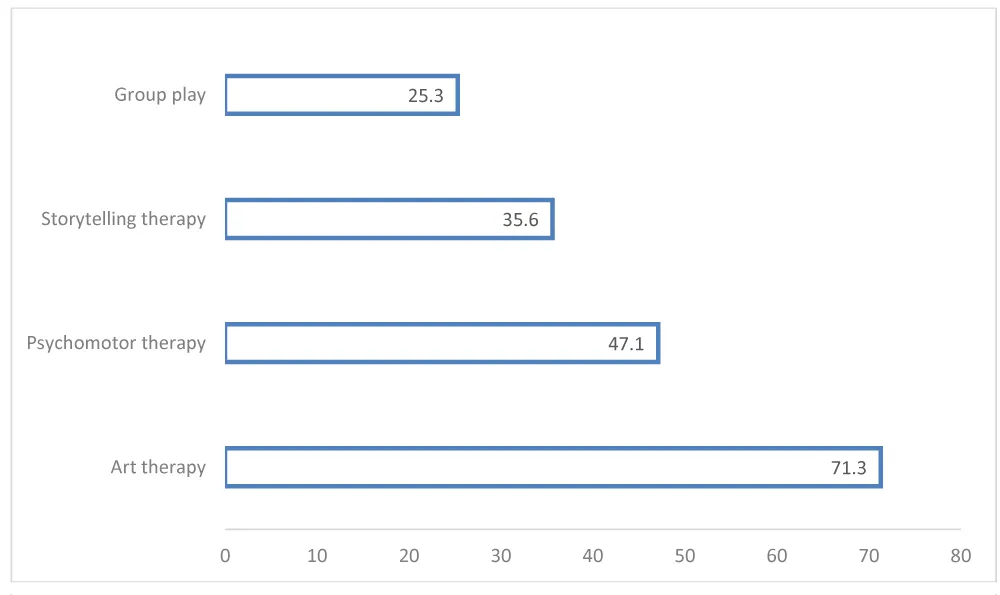
Art therapy was identified by 71.3% of respondents as the most beneficial method, followed by psychomotor therapy (47.1%), storytelling therapy (35.6%), and play groups (25.3%). (Figure 2).
Clinically, 97.7% of caregivers perceived a favorable change in the child’s psychological state. The perceived improvement scale (0 to 10) had a mean of 8.0 ± 1.8 (median: 8/10). (Figure 3).
Identified strengths and areas for improvement
The strengths reported by families were:
- Providing opportunities for the child to relax (56.3%).
- Helping the child find joy again (52.9%).
- Temporarily taking the child’s mind off their illness and pain (40.2%).
- Stimulation of cognitive and creative abilities (16.1%) and self-expression through drawing and painting (13.8%).
- Reassuring support provided to parents (12.6%).
- Strengthen social interaction and solidarity (5,7%)
The suggestions for improvement made by 50.6% of respondents focused primarily on increasing the number of weekly sessions (63.6%), improving equipment and toys (20.5%), and increasing the number of care staff (13.6%). (Table 2).
Discussion
Population profile
The clear predominance of acute leukemia (42.5%) and nephroblastoma (28.7%) is consistent with regional and international epidemiological data.
The observed geographic remoteness (55.2% of residents in rural areas) highlights the precarious nature of care pathways and the financial burden imposed on families, who are forced to make repeated trips to the capital.
The very high proportion of mothers (58.8%) reflects their pivotal role in providing daily support at the hospital within the Senegalese sociocultural context. This figure echoes the observations of Efe et al., in which 91% of mothers were homemakers or had had to stop working to care for their child, as well as the work of Wiener et al. on the central role and psychosocial exhaustion of the primary caregiver [10,11].
In our sample, 31% of caregivers had received an exclusively Arabic-and-Qur’anic education, and 17.2% had no formal education. A lack of proficiency in French (68% spoke only Wolof or Arabic) constitutes a major obstacle to understanding the diagnosis and establishing a therapeutic alliance—an additional stressor highlighted by Kagee (2022) in resource-limited countries [3].
Effectiveness of alternative psychotherapies
97.7% of respondents reported an improvement in their child’s psychological well-being, with an average rating of 8 out of 10. These observations align with international literature reporting caregiver-perceived benefits of art and body-based therapies (Bradt et al., Nguyen et al.) [11,12].
Art therapy ranks first among the approaches considered most beneficial (71.3%), followed by psychomotor therapy (47.1%) and storytelling therapy (35.6%). Art therapy and psychomotor therapy promote a symbolic distancing from suffering and the reappropriation of a wounded body (Merleau-Ponty, Fernandez-Henocque), while storytelling resonates deeply with the oral tradition and narrative mediation of local culture [12].
The benefits identified by caregivers include providing moments of relaxation (56.3%), helping patients find their smile again (52.9%), the ability to temporarily forget about the illness and pain (40.2%), and the reassurance provided to parents (12.6%). These mechanisms align with the psychophysiological theories of attentional focusing and the gate control theory (Arntz et al., Wood et al.), in which active distraction reduces pain perception and anticipatory anxiety [12].
Structural barriers, loss to follow-up, and the transition to a proactive model
Discontinuation of Post-Hospitalization Follow-Up: Efe et al. reported that 60% of patients discontinued their psychiatric follow-up after being discharged from the hospital [10]. Our study highlights a similar attrition rate linked to extreme logistical constraints. Of the 894 participants, only 264 attended regularly, representing 29.5%.
From Reactive to Proactive: The literature recommends systematic and early screening for distress as soon as the diagnosis is announced (SPCCCF Standard 1) [13,14].
At Le Dantec, although the My Child Matters program (since 2020) represents a major step forward, feedback from families (50.6%) points to the need to institutionalize and expand this model: increasing the frequency of sessions (currently once a week), strengthening the psycho-oncology team, incorporating music therapy, and adapting services to the Wolof language.
Conclusion
The integration of alternative psychotherapies at the UOP in Dakar represents a major step forward in the comprehensive care of children with cancer in Senegal. These therapies significantly improve the experience of the illness by providing opportunities for relaxation, self-expression, and resocialization.
To ensure the program’s long-term sustainability and expand it, the following steps should be taken:
- Institutionalize pediatric psycho-oncology and gradually decentralize it to the regions.
- Increase the frequency of sessions and expand the range of recreational and artistic materials available.
- Train dedicated staff and incorporate cultural and linguistic mediators to overcome local language barriers.
- Bryl K, Tortora S, Whitley J, Kim SD, Raghunathan NJ, Mao JJ, Chimonas S. Utilization, delivery, and outcomes of dance/movement therapy for pediatric oncology patients and their caregivers: a retrospective chart review. Curr Oncol. 2023;30(7):6497-6507. Available from: https://www.mdpi.com/1718-7729/30/7/477
- Al-Hussaini M, Abdel-Razeq H, Hammouri M, et al. Assessment of psycho-oncology in the Middle East and North Africa region: a systematic review and meta-analysis. Oncologist. 2024;29:e1452-e1469. Available from: https://doi.org/10.1093/oncolo/oyae193
- Kagee A. The need for psychosocial oncology research in sub-Saharan Africa: a review of the terrain. S Afr J Psychol. 2022;52(3):392-403. Available from: https://journals.sagepub.com/doi/10.1177/00812463221093842
- Oppenheim D, Hartmann O. Psychotherapeutic practice in paediatric oncology: four examples. Br J Cancer. 2000;82(2):251-254. Available from: https://doi.org/10.1054/bjoc.1999.0911
- Coughtrey A, Millington A, Bennett S, et al. The effectiveness of psychosocial interventions for psychological outcomes in pediatric oncology: a systematic review. J Pain Symptom Manage. 2018;55(3):939-954.
- Steele AC, Mullins LL, Mullins AJ, et al. Psychosocial interventions and therapeutic support as a standard of care in pediatric oncology. Pediatr Blood Cancer. 2015;62 Suppl 5:S585-S618. Available from: https://doi.org/10.1002/pbc.25701
- Scarponi D, Pession A. Play therapy to control pain and suffering in pediatric oncology. Front Pediatr. 2016;4:132. Available from: https://doi.org/10.3389/fped.2016.00132
- Kazak AE, Noll RB. The integration of psychology in pediatric oncology research and practice: collaboration to improve care and outcomes for children and families. Am Psychol. 2015;70(2):146-158.
- Tortora S. Children are born to dance! Pediatric medical dance/movement therapy: the view from integrative pediatric oncology. Children (Basel). 2019;6(1):14. Available from: https://doi.org/10.3390/children6010014
- Efe A, Çelik YS, Kaşak M, et al. Psycho-oncological issues in a pediatric sample: two years follow-up data of consultation liaison psychiatry. Psychooncology. 2025;34:e70112. Available from: https://doi.org/10.1002/pon.70112
- Wiener L, Devine KA, Thompson AL. Advances in pediatric psychooncology. Curr Opin Pediatr. 2019;31(1):1-7.
- Schepers SA. Commentary: fifty years of development in pediatric psycho-oncology research and practice: how far have we come? J Pediatr Psychol. 2019;44(7):781-783. Available from: doi:10.1093/jpepsy/jsz043.
- Foster K, Sadler B, Conrad AL, Grafft A. Development of an evaluation tool for monitoring the delivery of psychosocial care in pediatric oncology settings. Cancers (Basel). 2025;17(9):1550. Available from: https://doi.org/10.3390/cancers17091550
- Wiener L, Viola A, Koretski J. Pediatric psycho-oncology care: standards, guidelines, and consensus reports. Psychooncology. 2015;24(2):204-211. Available from: https://doi.org/10.1002/pon.3589


 Save to Mendeley
Article Alerts
Subscribe to our articles alerts and stay tuned.
 This work is licensed under a Creative Commons Attribution 4.0 International License.